Importance of Current Exchange Rates
📅 2026 Update: Recent Changes in Retirement Accounts and Consumer Finance
Since the original article was written, several significant updates have taken place in personal finance law, especially regarding retirement accounts. These changes aim to enhance retirement savings and flexibility for individuals. The earlier article continues further down the page, providing foundational knowledge on these topics.
📈 SECURE 2.0 Act Changes
The SECURE 2.0 Act introduced key updates to retirement savings rules. The Required Minimum Distribution (RMD) age now starts at 73 for those born between 1951 and 1959 and will increase to 75 for individuals born in 1960 or later. This change allows retirees more time to grow their savings before withdrawing.
- 📉 RMD Penalty Reduction: The penalty for not taking an RMD dropped from 50% to 25% of the RMD amount. If corrected within two years, this penalty can further decrease to 10% for IRAs.
💰 Roth 401(k) Changes
Starting in 2024, individuals with Roth accounts in employer retirement plans, such as 401(k)s, will no longer need to take RMDs. This change can significantly benefit those looking to maximize tax-free growth in their retirement savings.
🎓 529-to-Roth IRA Rollovers
Beginning in 2024, individuals can roll over up to $35,000 from 529 college savings plans to a Roth IRA, subject to specific conditions. This option can provide more flexibility in managing education funds and retirement savings.
👩💼 Student Loan Payment Matching
As of 2024, employers can treat qualified student loan payments as retirement contributions. This new rule allows employees to receive matching contributions based on the amount they pay toward their student loans.
📌 Key Points Summary
- 🚀 RMD age raised to 73 and will increase to 75.
- 🔽 RMD penalty reduced significantly under SECURE 2.0.
- 🏦 Roth accounts in employer plans exempt from RMDs starting in 2024.
- 🎓 Roll over up to $35,000 from 529 plans to Roth IRAs from 2024.
- 💼 Employers can match student loan payments as retirement contributions.
💡 Tips for Navigating Current Personal Finance Laws
Review your financial situation with an attorney to ensure compliance and optimal planning.
🏦 Understand RMD Rules
Be aware of the new RMD rules under the SECURE 2.0 Act. Knowing when you must start taking distributions can help you avoid penalties and manage your retirement funds effectively.
📅 Plan for Catch-Up Contributions
If you are aged 60 to 63, consider making catch-up contributions of up to $11,250 starting in 2025. This increase can significantly boost your retirement savings as you approach retirement.
📚 Use 529 Funds Wisely
If you have 529 college savings plan funds, look into the option to roll over up to $35,000 into a Roth IRA starting in 2024. This can provide additional flexibility for your retirement planning.
🏢 Evaluate Your 401(k) Fees
Check the fees associated with your 401(k) plan. High fees can erode your savings, so it may be beneficial to consider rolling over to an IRA if your plan's costs are excessive.
🏫 Take Advantage of Employer Matching
If your employer offers matching contributions for student loan payments, take full advantage of this benefit starting in 2024. It’s a smart way to boost your retirement savings while managing education debt.
❓ Frequently Asked Questions
❓ What is the new RMD age under the SECURE 2.0 Act?
The RMD age is now 73 for those born between 1951 and 1959 and will increase to 75 for individuals born in 1960 or later.
📅 How can I roll over my 401(k) to an IRA?
To roll over a 401(k) to an IRA, contact your 401(k) plan administrator to request a direct rollover and provide your IRA account information.
📈 What are catch-up contributions, and who qualifies?
Catch-up contributions allow individuals aged 60 to 63 to add up to $11,250 to their retirement plans starting January 1, 2025.
💰 Are there penalties for not taking RMDs?
Yes, the penalty for failing to take an RMD has decreased to 25% of the RMD amount, and it can be reduced to 10% if corrected within two years for IRAs.
🏦 Can I withdraw from my retirement account for emergencies?
Starting in 2024, you can withdraw up to $1,000 per year from your retirement account for emergencies without incurring the 10% early withdrawal penalty.
🎓 What is the benefit of rolling over 529 funds to a Roth IRA?
Rolling over up to $35,000 from 529 plans to a Roth IRA provides more flexibility in managing education funds and retirement savings, starting in 2024.
⚖️ Recent Cases Impacting Personal Finance
Recent court rulings have affected personal finance laws, particularly regarding retirement plan regulations and fiduciary responsibilities. These rulings can influence how financial services operate and how individuals manage their retirement savings.
- Court reverses mortgage attorney fees in Apex Bank caseAppellate Division of the Supreme Court of the State of New York · July 1, 2026
- Texas Court dismisses appeal in loan servicing caseTexas Court of Appeals, 13th District · July 2, 2026
- Tennessee court rules on divorce, alimony, and debt divisionCourt of Appeals of Tennessee · July 2, 2026
- Florida court affirms ruling in Yudovich vs. Investment 1611District Court of Appeal of Florida · July 9, 2026
For more recent rulings, feel free to browse more rulings on the news page.
End of October 2026 Update
What Are Current Exchange Rates?
Current Exchange Ratesare rates of valuation that are applied to monetary systems, or types of currency in circulation specific to individual nations or countries. The Current Exchange Ratesare defined by the present-day value of an individual currency innate within itself, as well as with regard to other types of currency in circulation.
Current Exchange Rates and Trading
Currencies that maintain higher exchange within the setting of present day may allow for an individual acquiring that currency – in exchange of another currency – to receive a larger amount of a currency with a higher exchange rate. Conversely, currencies with Current Exchange Rates lower in values – or in decline - may allow for a subtracted amount of that currency received upon exchange:
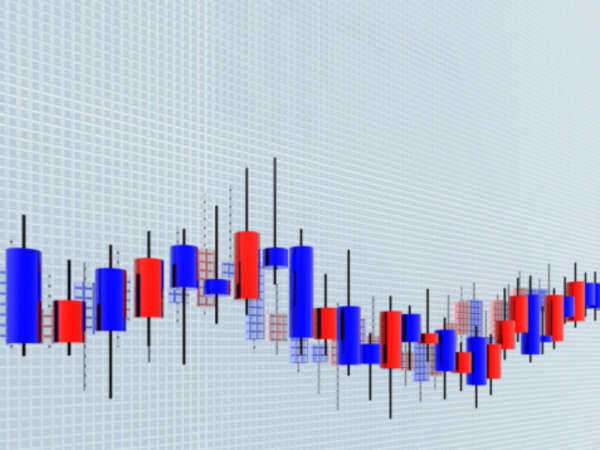
Upon the analysis of Current Exchange Rates with regard to specific currency systems in circulation.
Individuals will be able to gauge their commercial and financial activity in tandem with FOREX charts; FOREX Charts – which stand for ‘Foreign Exchange Charts’ – are a common moniker for documentation or resources illustrating Current Exchange Rates.
Why Are Current Exchange Rates Important?
Financial activity undertaken as a result of the analysis of Current Exchange Rates can manifest in a variety of forms. Currency exchange trading may be structured as per the result of varying ideologies involving any or all events occurring – in present day - within the boundaries of individual countries or nations. As a result, Current Exchange Rates are often considered to be corollary to events and circumstances financial, commercial, and economic in nature:
The fluctuation of any or all of these events will typically dictate the valuation process expressed within Current Exchange Rates; in addition, these figures may also illustrate an anticipated exchange rate, the market behavior, or estimations concerning applicable trends.
Current Exchange Rates corollary to the variety of currency systems currently in circulation provides individuals with information and resources pertinent tothe valuation process and behavior with regard to both individual currency systems, as well as trends existing in conjunction to the value of other currency systems.
Current Exchange Rates may provide for the explication of certain foreign currencies known for their respective – and identifiable – value fluctuation in tandem with coinciding currencies; yet, the Current Exchange Rates belonging to other currency systems maynot experience fluctuation contingent on peripheral currency exchange rates.
What Can Be Learned from Current Exchange Rates?
Currency exchange rates are considered to be primarily reliant on the stasis of the economy belonging to a particular country or nation; Current Exchange Rates corresponding to individual countries or nations may provide for an advanced understanding of economic events taking place within that country or nation:
For example, countries – or nations - undergoing financial and economic prosperity may experience increased valuation with regard to their currency; this may be illustrated by their respective Current Exchange Rates.
In contrast, countries or nations undergoing economic or financial instability may experience a severe decline with regard to the value of their currency – or monetary system; this can also be reflecting within their respective Current Exchange Rates.