Federal Reserve Bank of New York
📅 2026 Update: Changes in Personal Finance and Retirement Laws
Since the original article was published, important changes have taken place in U.S. personal finance and retirement laws. The SECURE 2.0 Act has introduced several updates that affect retirement accounts, including changes to Required Minimum Distributions (RMDs) and withdrawal options. The earlier article continues further down the page to provide more context and details.
📈 RMD Age Changes
The SECURE 2.0 Act raised the age for Required Minimum Distributions. Individuals born between 1951 and 1959 must start taking RMDs at age 73, while those born in 1960 or later will begin at age 75. This gives individuals more time to grow their retirement savings before being required to withdraw funds.
- 🔄 RMD Penalty Reduction: The penalty for missing an RMD has dropped from 50% to 25% of the RMD amount. If individuals correct the mistake within two years, the penalty further reduces to 10% for IRAs.
💰 New Contribution Rules
Starting January 1, 2025, individuals aged 60 to 63 can make catch-up contributions of $11,250 to eligible retirement plans, an increase from the previous limit of $8,000. This change aims to help older workers save more as they approach retirement.
- 💳 Student Loan Payment Matching: As of 2024, employers can match contributions based on employees' qualified student loan payments. This allows employees to receive matching funds for their retirement accounts while paying off student loans.
🎓 529-to-Roth IRA Rollovers
Beginning in 2024, individuals can roll over up to $35,000 from 529 college savings plans to a Roth IRA. This change provides more flexibility for individuals to manage their education savings and retirement funds.
🚨 Emergency Withdrawals from Retirement Accounts
Starting in 2024, individuals can withdraw up to $1,000 per year from retirement accounts for emergencies without facing the 10% early withdrawal penalty. This amount can be repaid within three years, offering a safety net for unexpected expenses.
📌 Key Points to Remember
- 🔹 RMD age increased to 73 and 75.
- 🔹 RMD penalty reduced to 25% and 10% if corrected quickly.
- 🔹 Catch-up contributions rise to $11,250 for older workers.
- 🔹 529 plan rollovers to Roth IRAs allowed up to $35,000.
- 🔹 Emergency withdrawals up to $1,000 permitted without penalties.
💡 Tips for Managing Your Retirement Funds
Review the details of your own situation with your attorney.
📝 Understand RMD Requirements
Make sure to know your RMD start age based on your birth year. Missing RMD deadlines can result in significant penalties.
🔍 Compare Fees
When looking at retirement accounts, compare fees between your 401(k) and IRA options. Some 401(k) plans may have higher fees, which can affect your overall savings.
📈 Utilize Catch-Up Contributions
If you are nearing retirement age, take advantage of the higher catch-up contributions starting in 2025. This can help you boost your retirement savings significantly.
🎓 Consider 529 Plan Rollovers
Think about rolling over unused 529 plan funds into a Roth IRA if you have met the necessary conditions. This can help you use that money for retirement instead of letting it go unused.
🚨 Plan for Emergencies
Keep in mind that you can withdraw up to $1,000 per year from your retirement accounts for emergencies starting in 2024. This can provide extra financial flexibility when unexpected expenses arise.
❓ Frequently Asked Questions
❓ What is the new RMD age?
Individuals born between 1951 and 1959 must start RMDs at age 73. Those born in 1960 or later must begin at 75.
💸 How can I avoid penalties for missed RMDs?
To avoid penalties, ensure you take your RMD by April 1 of the year following the year you turn 73 or 75, depending on your birth year.
🏦 Can I make catch-up contributions to my retirement plan?
Yes, starting January 1, 2025, individuals aged 60 to 63 can make catch-up contributions of $11,250 to eligible retirement plans.
🎓 What is the 529-to-Roth IRA rollover?
Beginning in 2024, individuals can roll over up to $35,000 from their 529 college savings plans to a Roth IRA, under certain conditions.
🚨 What are emergency withdrawals from retirement accounts?
Individuals can withdraw up to $1,000 per year from their retirement accounts for emergencies without incurring a 10% early withdrawal penalty starting in 2024.
💼 How does student loan payment matching work?
As of 2024, employers can match contributions based on qualified student loan payments, allowing employees to receive matching contributions for retirement accounts.
⚖️ Recent Court Cases Related to Retirement Law
Recent court rulings have impacted personal finance and retirement laws, notably the vacating of the Department of Labor's Retirement Security Rule. This rule aimed to define an investment advice fiduciary, which is important for retirement account management.
- Puerto Rico court reverses dismissal in debt collection caseTribunal De Apelaciones De Puerto Rico/Court of Appeals of Puerto Rico · June 29, 2026
- Court rules on Fair Credit Reporting Act case appealCourt of Appeals for the Tenth Circuit · July 20, 2026
- Court rules against Sykes in credit reporting caseCourt of Appeals for the Seventh Circuit · July 30, 2026
- New York court rules on mortgage foreclosure case involving Deutsche BankAppellate Division of the Supreme Court of the State of New York · July 29, 2026
For more information, you can browse more rulings on the news page.
End of October 2026 Update
What is the Federal Reserve Bank of New York?
• The Federal Reserve Bank of New York is one of 12 Reserve Banks in the United States of America. Located at 33 Liberty Street in New York City, the Federal Reserve Bank of New York is responsible for the Second District of the Federal Reserve System, which specifically oversees all of New York Stat, 12 northern counties in New Jersey, Fairfield County in Connecticut, the United States Virgin Islands and Puerto Rico.
• The Federal Reserve Bank of New York is responsible for implementing monetary policy and regulating financial institutions in the aforementioned regions. In addition, the Federal Reserve Bank of New York helps maintain the nation’s payment system. Of the 12 regional Federal Reserve Banks, the Federal Reserve Bank of New York is largest in regards to assets and the most active in regards to volume; as such, the Federal Reserve Bank of New York is often regarded as the most influential Reserve Bank in the United States.
Primary Responsibilities of the Federal Reserve Bank of New York:
• The Federal Reserve Bank of New York operates out of Manhattan’s Financial District; this area is where monetary policy for the United States is implemented. Although policy issues are decided in Washington, D.C. (by the Board of Governors of the Federal Reserve System) the influence and size of the Federal Reserve Bank of New York maintains primary authority in the implementation regarding the nation’s monetary supply.
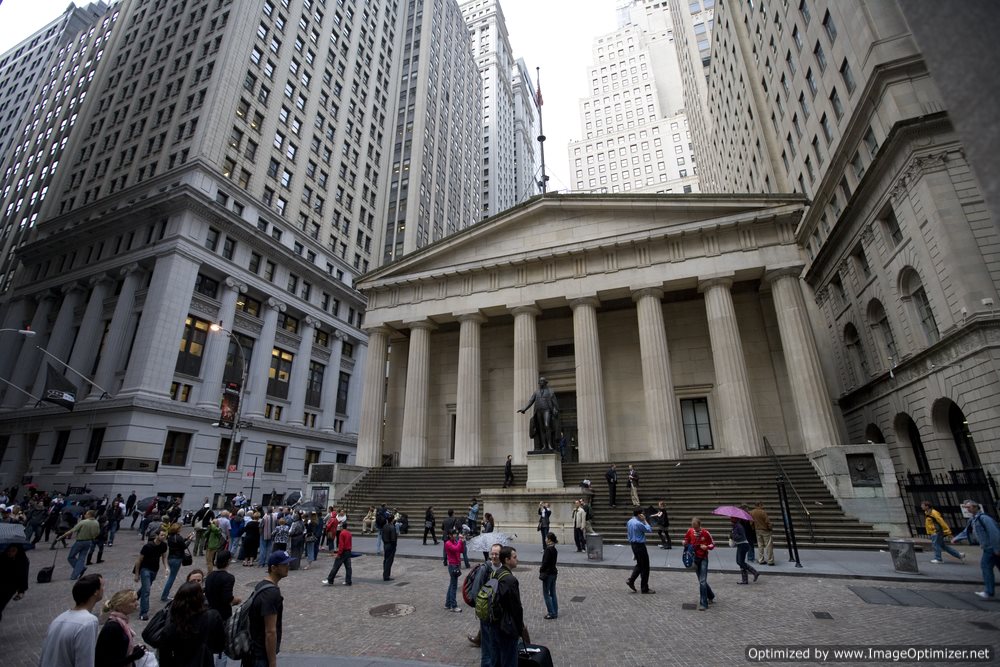
• The New York Federal Reserve is a private bank responsible for conducting market operations, primarily the buying and selling of outstanding treasury securities in the country. More specifically, the Trading Desk is the post at the Federal Reserve Bank of New York where the managing of bond transactions takes place.
• The Federal Reserve Bank of New York is also responsible for carrying out and regulating exchange rate policy. The institution achieves this by buying and selling dollars at the discretion of the United States Treasury Office. As a result of this responsibility, the Federal Reserve Bank of New York is the only regional bank in possession of a permanent vote on the Federal Open Market Committee.
Organizational Structure of the Federal Reserve Bank of New York
• The current president of the Federal Reserve Bank of New York is William Dudley. The Federal Reserve Bank of New York formally began operating in 1914 under the leadership of President Benjamin Strong.
• The Federal Reserve Bank of New York, although larger and more influential than the other regional banks, utilizes the system’s uniform hierarchy: the bank possesses a three-class Board of Directors as well as the same organizational and legal structure as the other regional banks.